My art is quite eclectic and I’ve been trying different media. My search is not over, but I thought it would be good to share my creative journey with you, I think it explains a lot 🙂 I’ll start from the very beginning and do it in several parts, so bear with me.
Chapter One: Beginnings
I took some art classes at around 5-6 years old, but in my family and at that time in Russia, doing art was not considered a serious career prospect. My mom and grandmother did a lot of mending and sewing, and I learned to hold the needle very early. I also had some embroidery sessions in my kindergarten, and I’m very grateful for that. Arts and crafts were always just for fun and broadening the horizons rather than skills for the future. I did really well in our regular school curriculum art classes and even drew a few things for my classmates, but never did anything extra.
In my early university years, where I went to study languages, I picked up photography. I felt extremely insecure in front of the camera, so I decided that the safest way would be to hide behind it. I became my friends’ photographer at many events and did some creative fashion-like sessions too. I also learned some basic editing in Photoshop and Lightroom—I have to admit, I used pirate versions of the software because it was the only way to source it back then; I simply couldn’t afford it anyway. Now I realize that I learned a lot back then and am sort of grateful for my camera shyness. Later, I started traveling a bit, and street photography took a big part. When I moved to Denmark, photography was still my major hobby, and I met great people thanks to that. I traveled more than ever and had a lot of good material, but after a couple of years, I felt that I’d like to express myself differently and be 100% in charge. At that point, I wanted to be able to do something from scratch, and that “something from scratch” became drawing and painting. I was absolutely fascinated by watercolor paintings that I’d seen on the Internet and followed a few artists very closely. This was before Instagram was so big, so I was still on LiveJournal. It took me another couple of years to build the courage and do some research to join my first adult art course. It was January 2015.


Chapter 2: My watercolor era
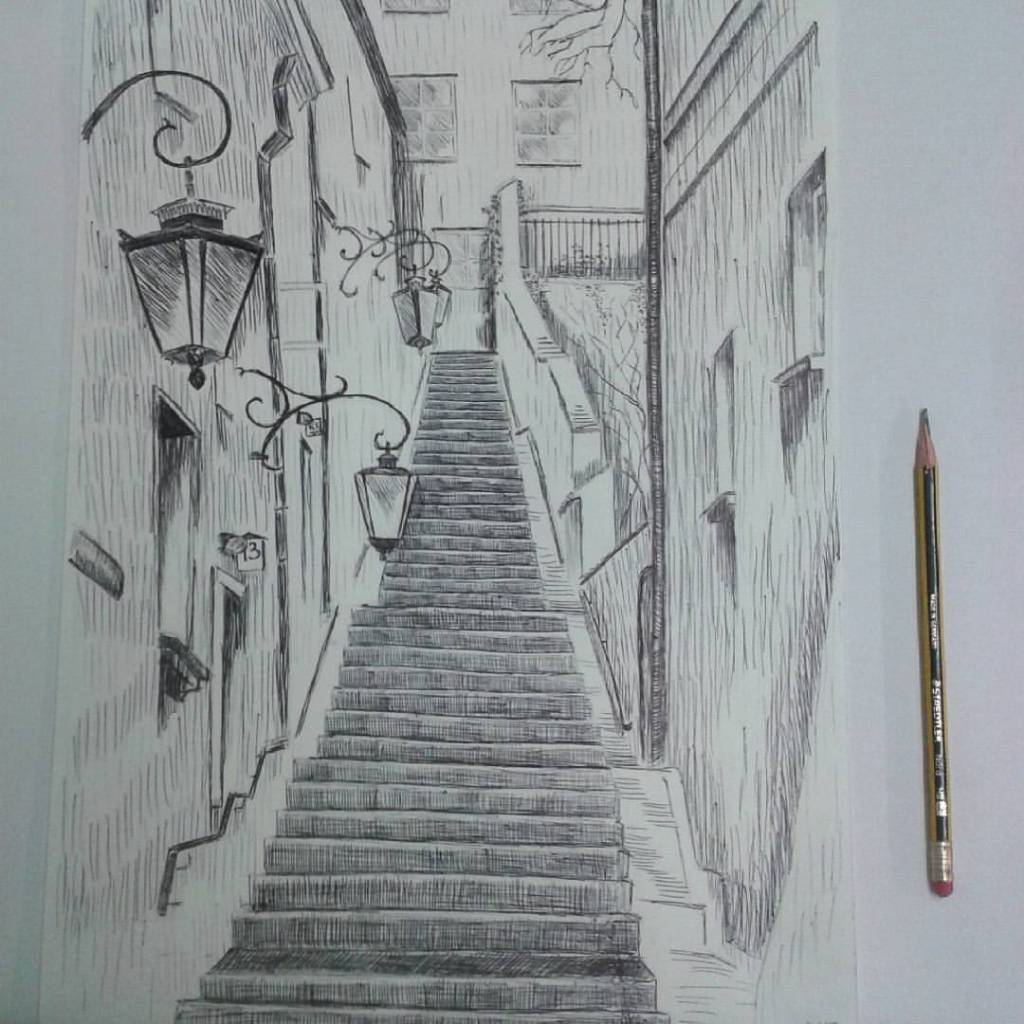
I joined an FOF course in Aalborg. It is an evening school for adults that has a variety of classes, from hobby subjects like arts to language courses and fixing furniture—anything you like. I had a great teacher named Peter, but unfortunately, my Danish then was very poor, and I barely understood even half of what he was trying to tell me. His phrase about drawing, “drawing is seeing,” still feels genius though. I think only now am I realizing the point of this phrase and can actually see some things clearly. It’s amazing how only after getting quite a lot of viewing experience and really staring at shapes for a long time, you start perceiving things much better and noticing things that you otherwise would never notice. I was dreaming of watercolor back then, but I quickly realized that to paint, I needed to learn drawing. So the first half a year in that school, I was doing a lot of graphics with a plain pencil and a black ball pen. I will attach a few examples. It’s funny, I used to be so much more patient than I am now; I worked on the same piece for several evenings and didn’t think it was weird or too slow. These days, I need things to happen much faster, and I really don’t like that about myself. So I went on for two seasons/semesters. It was about one full year of proper schooling. Later on, I took a few online courses specifically for watercolor. I was still fascinated.
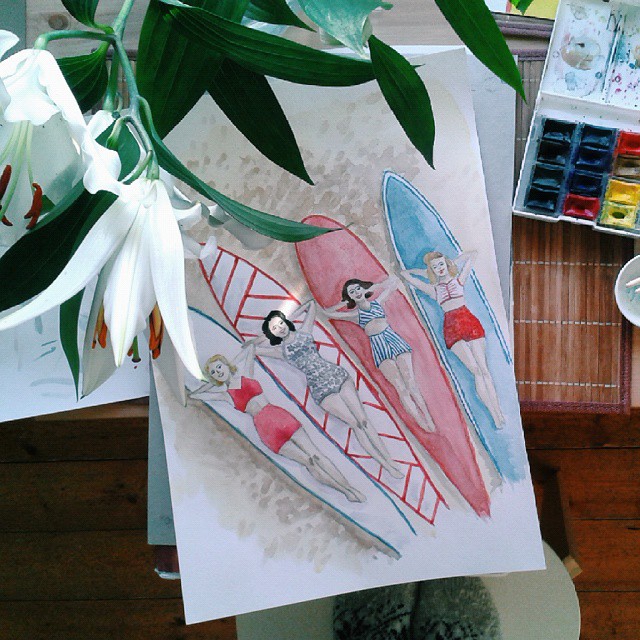
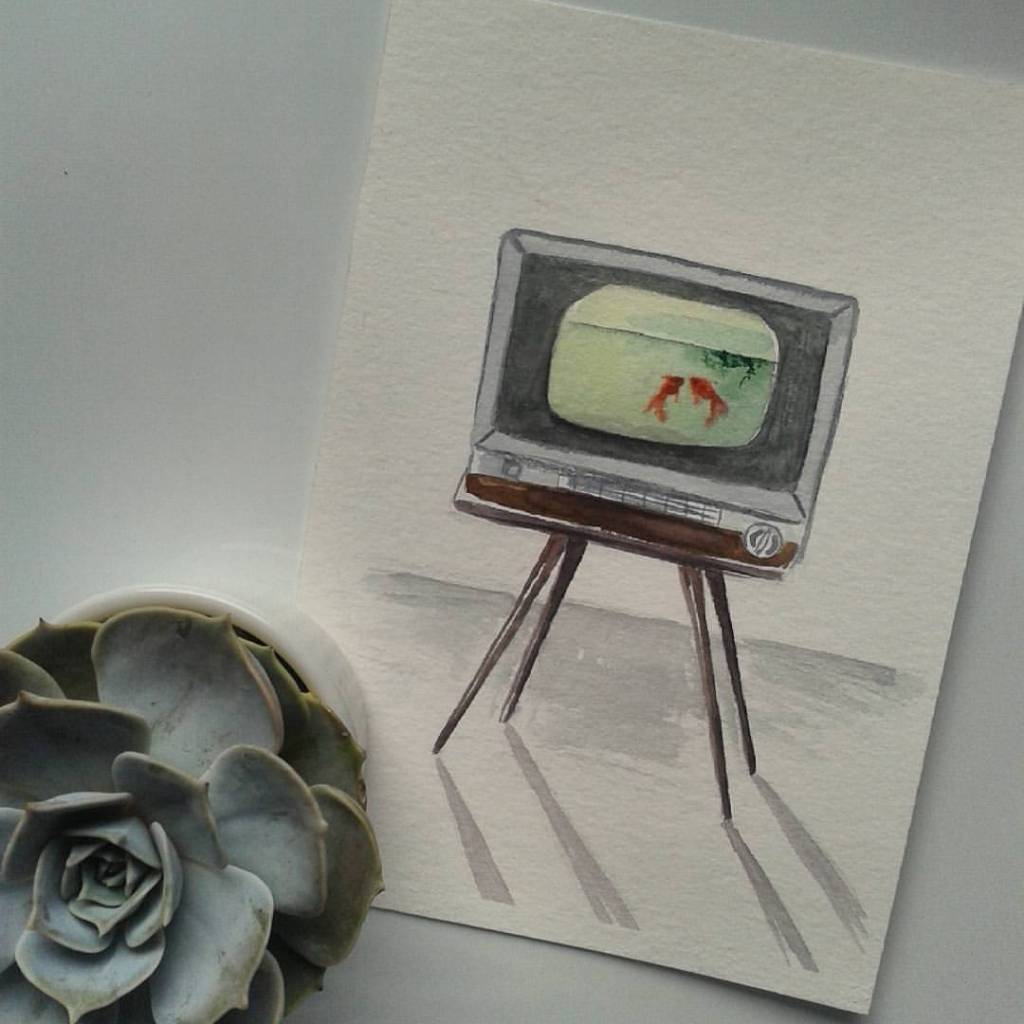
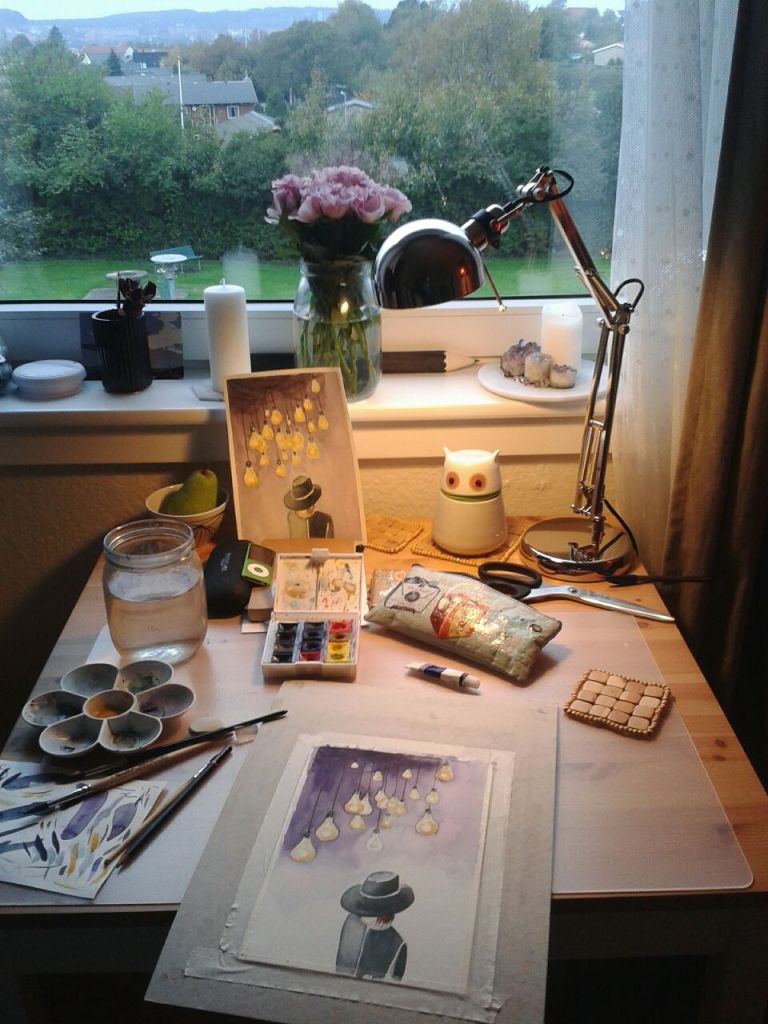
I always adored female beauty, so my first subjects were basically girls. I did some sort of fashion illustration in watercolor. Later, I moved to creatures because I love them too. Then I had a stage with landscapes—finally, I felt confident enough to do bigger pieces, and I did quite a few. For months, I focused on cityscapes and landscapes. It was also a big growing experience for me. But then, after two years of very intensive watercoloring and ‘layered’ pieces, I craved simplicity. I started doing some kind of postcard-type illustration that worked really well for digital and was quick and satisfying to make. I watched a small course on children’s illustration, and it totally consumed me. I have a big series from that time; many of them are on my postcards. I did it for quite a while and still use many of those techniques. I was extremely productive, and looking back, I can see that I made huge progress during those first two years. Recently, I flipped through my entire Facebook history and realized that most of my watercolors that I still like today were made in 2015 and 2016.
Then I got tired of watercolor..





Chapter 3: Printing
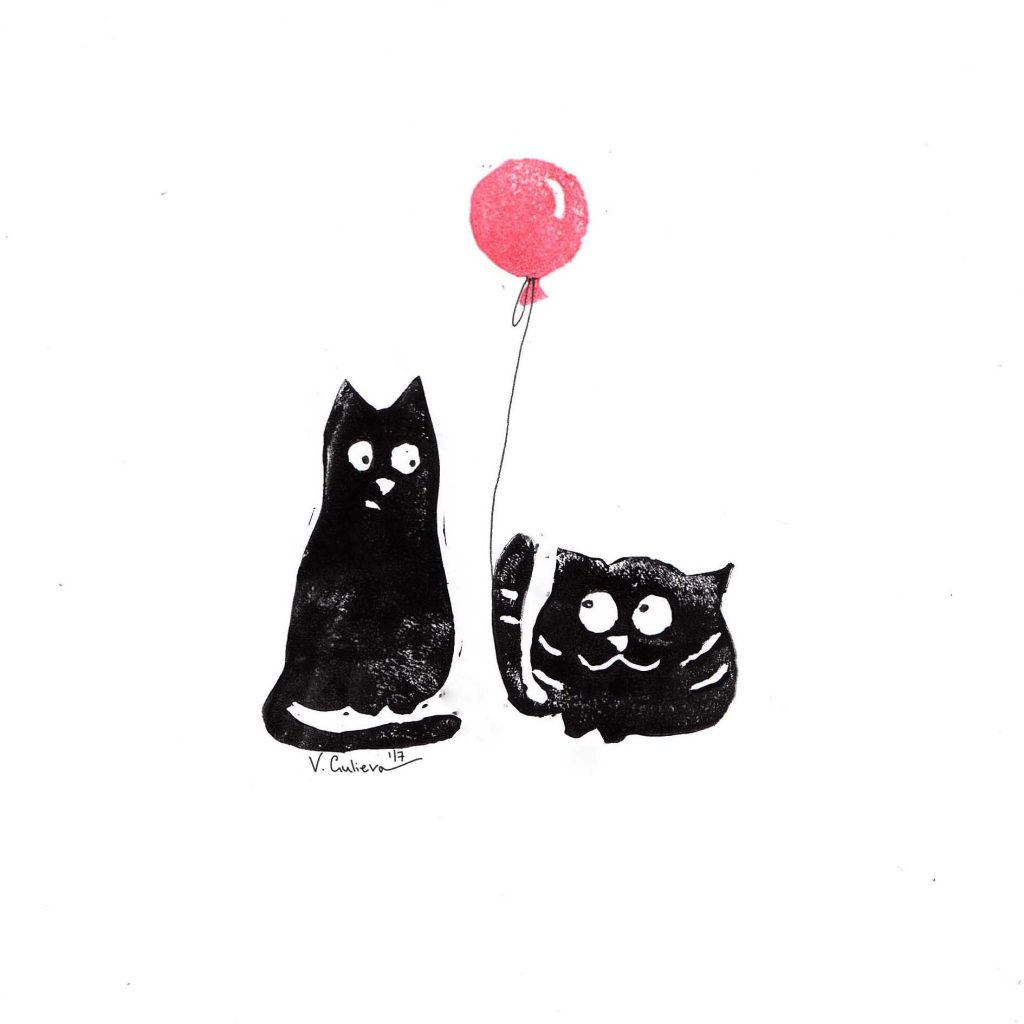
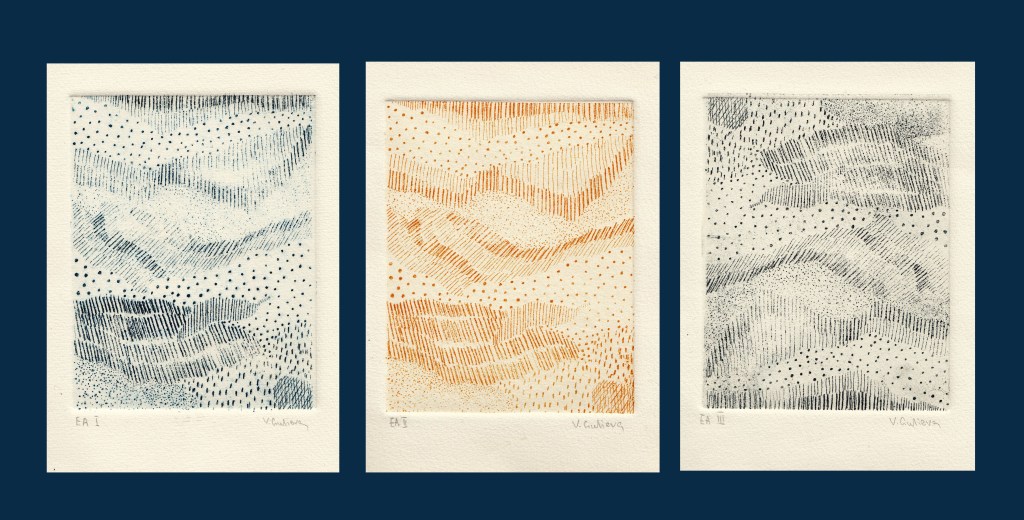
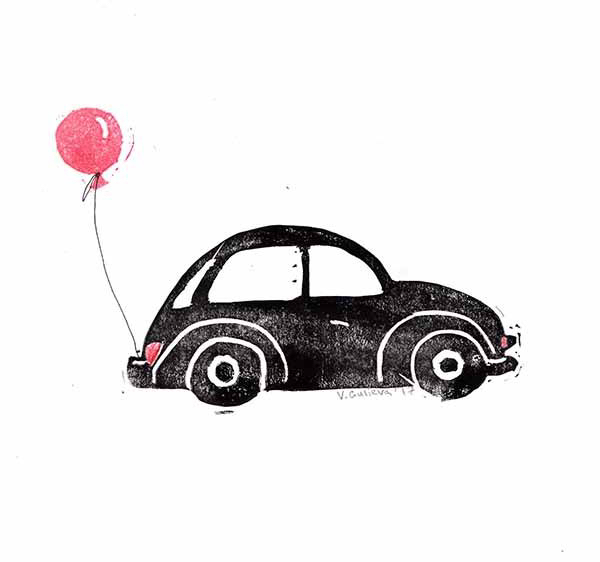
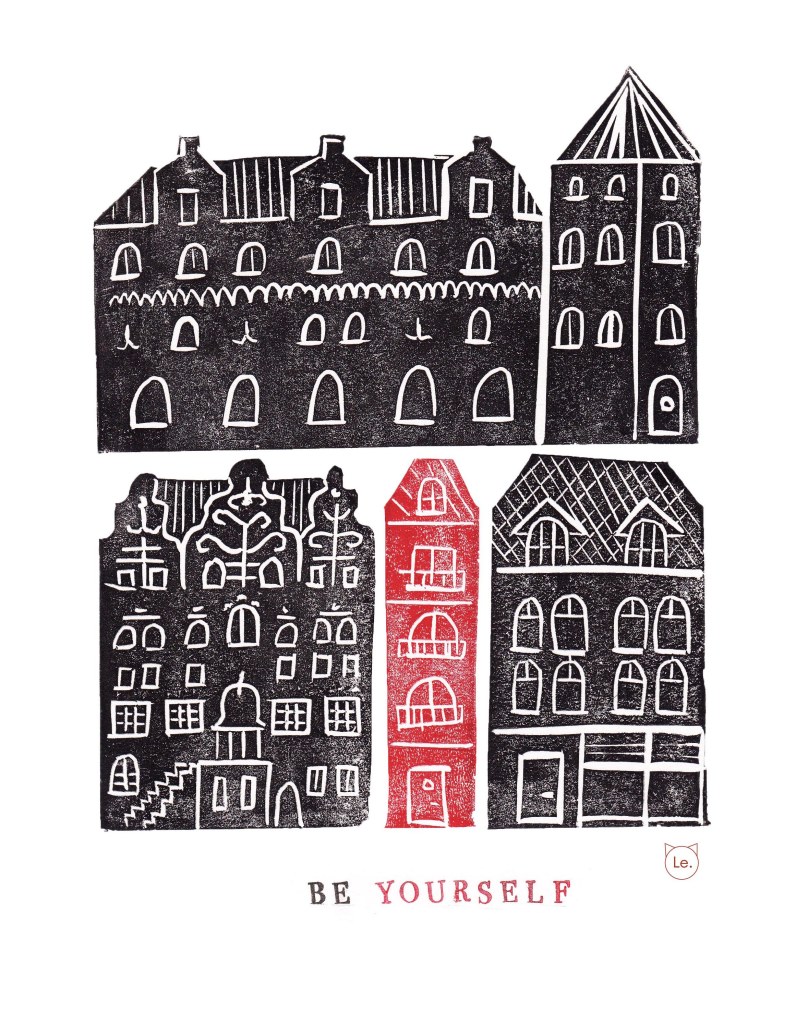
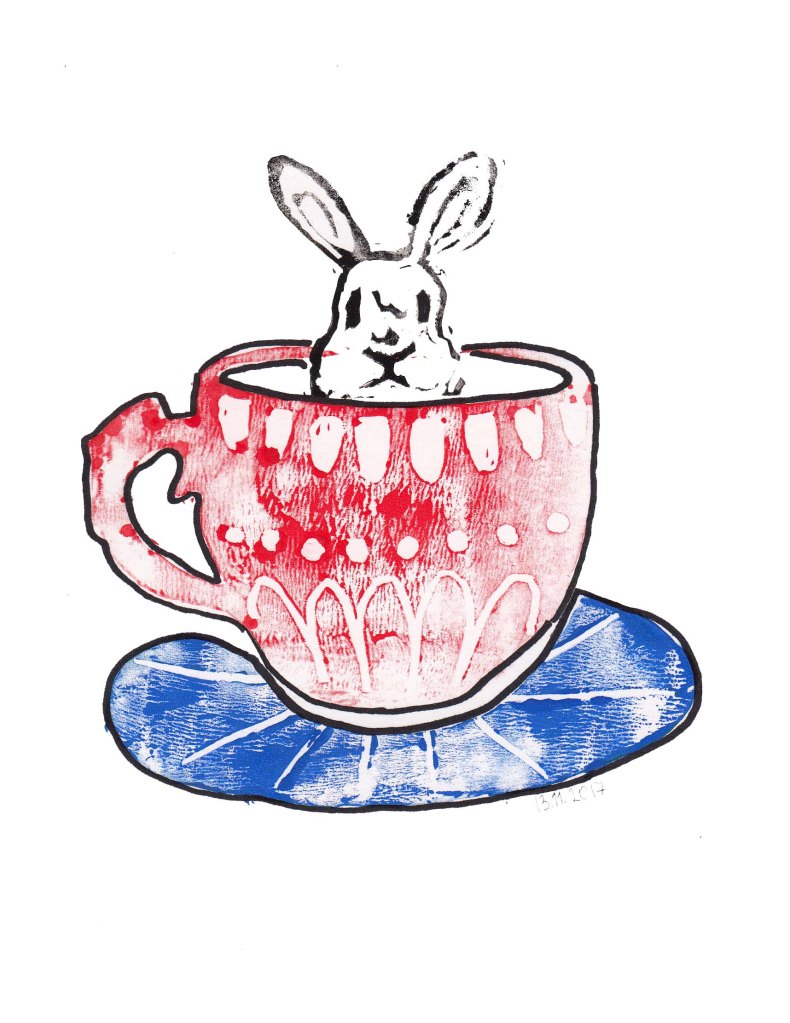
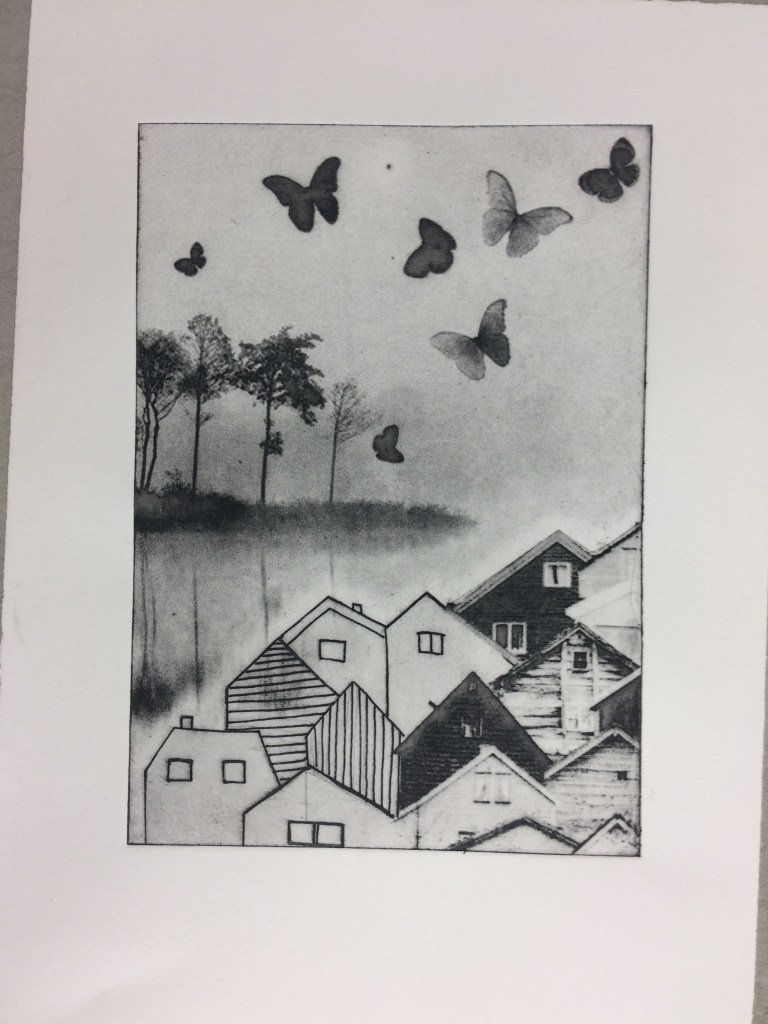
Then I got tired of watercolor.. and decided it was time to start something new. Like I said, I was very much into simplicity at that point, and it’s sort of hard to find a simpler or less sophisticated way of expressing yourself visually than linoleum prints. So I think for the next year, I was reading everything I could find and buying lots and lots of materials on Amazon. I felt very free and experimental, and I still like those works of mine. I will come back to lino at some point as well, even though, to be honest, I think cutting yourself regularly with very sharp tools is a type of entertainment that doesn’t suit everybody. I was so excited about printing techniques that in 2018, I spent my summer holiday at the Art Academy in London. I did a course in photopolymer and photoetching. It was amazing. I met many cool people, and I felt very free and excited – maybe also becuale I was dancing lindy hop to live bands pretty much every night too, hehe. It felt amazing. But the techniques I tried there required quite a lot of complicated equipment and special chemicals, so it was not exactly doable for me at home. Then two years later, in the midst of the pandemic, I went to a summer school in Denmark (it’s called højskole here). I did other types of printing again, less complicated than in London, but still not as home-friendly as linoleum. Maybe my third face-to-face printing course will finally be in lino. It is truly the most user-friendly and doable thing for home printing, and I love it for that.






Chapter 4: A Happy Accident
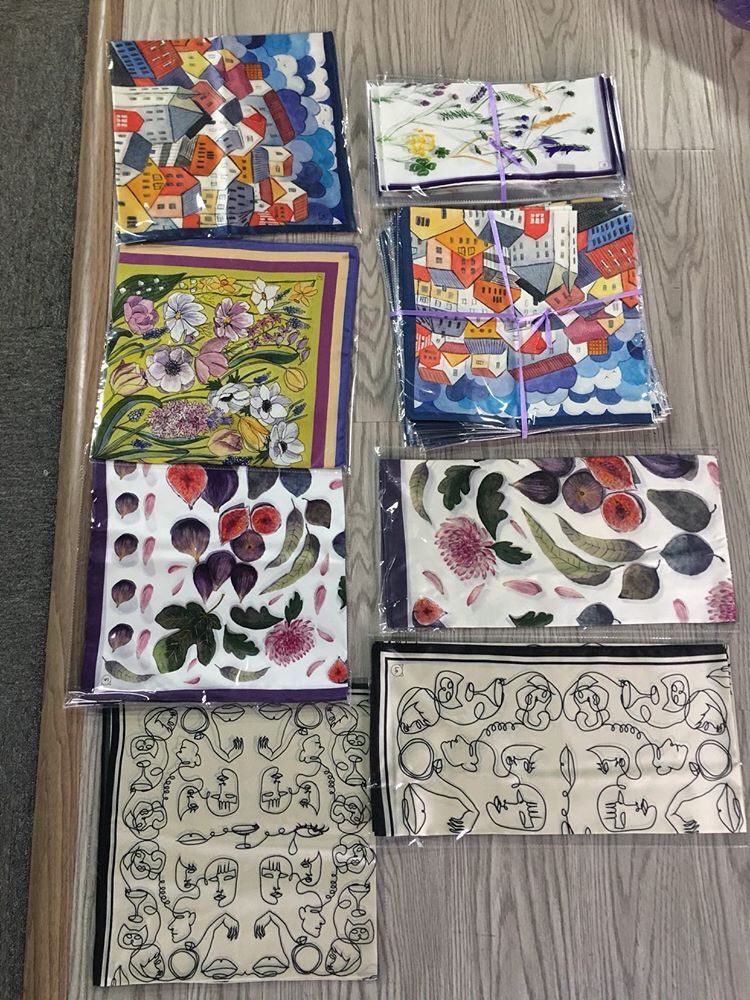
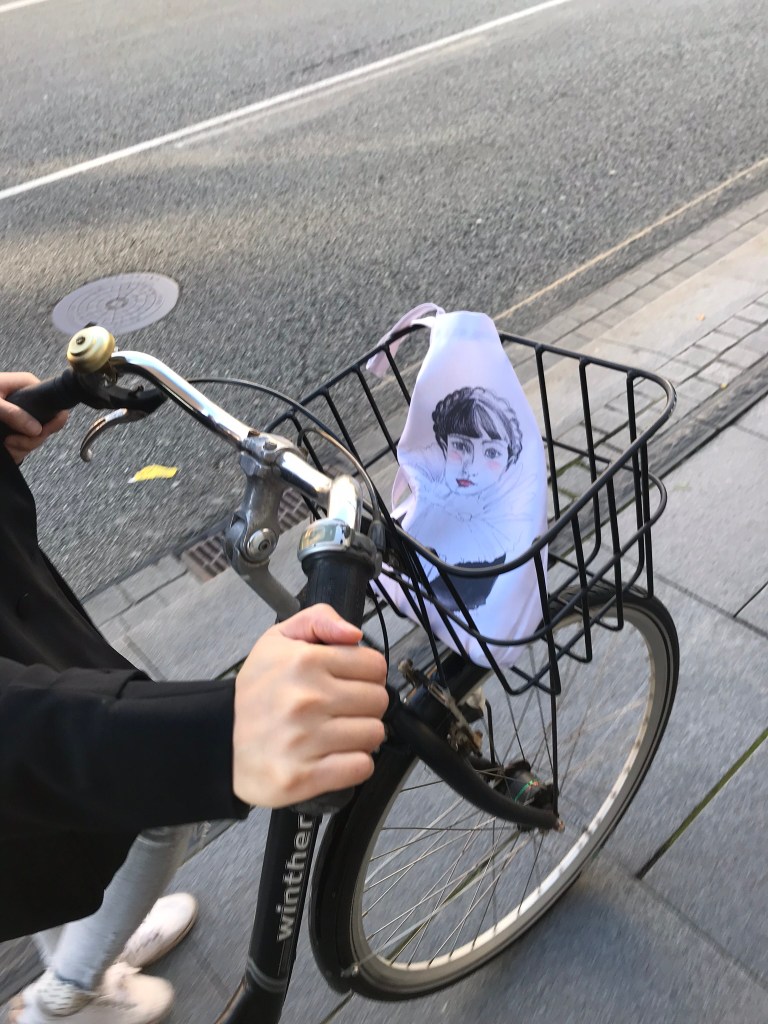
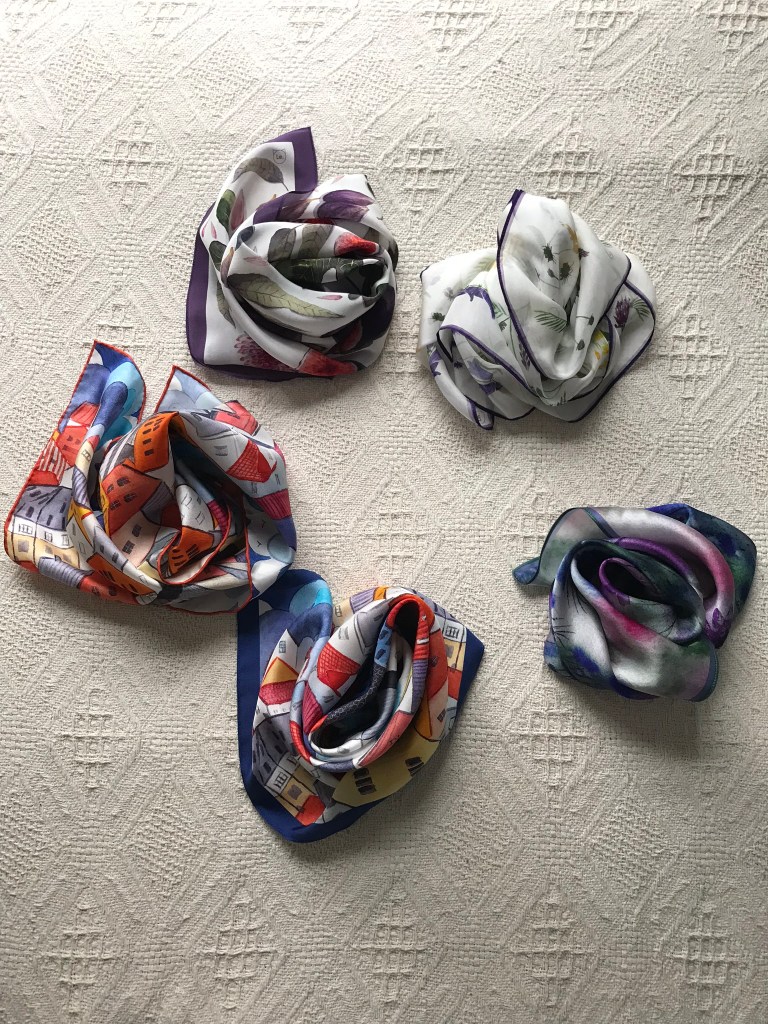
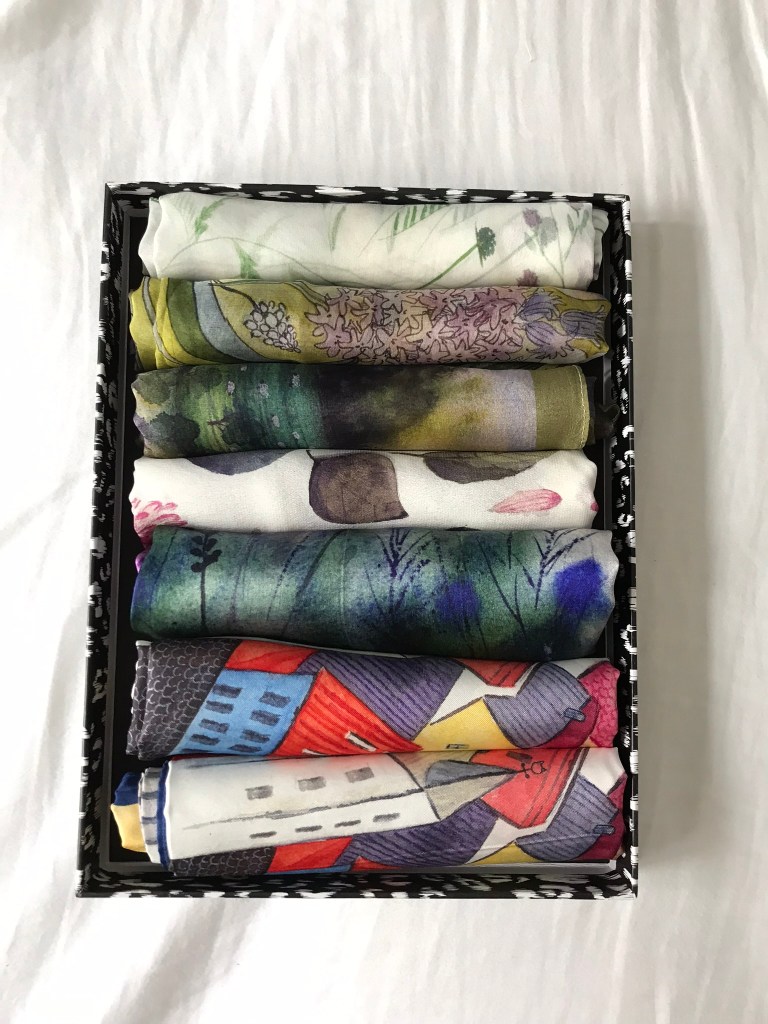
In 2018, I was playing with the scans of my watercolors and realized that I could put them together into interesting rectangular patterns. This is how I started my little scarf project. It was an amazing feeling to touch something that is both usable and pretty, and that came directly from my head (and a big textile printer, haha). I still think it’s a special kind of magic—from idea to finished product. It’s like Christmas every time I receive a package with new samples.
My first production attempt was with a printing house in Russia, where we printed squares on chiffon that we later cut and trimmed ourselves. The quality was obviously amateur, but with nothing to compare it to, I was already super excited. It was synthetic and rough around the edges, but it was the first product I ever created, and it felt amazing.
I was contacted through Instagram by a Chinese firm that offered to make some samples of my scarves in silk. It felt risky, but the investment for samples was not huge, so I decided to go ahead. When I received the first two samples, I was absolutely amazed. I could never have imagined that I could produce something of this quality. I still work with this firm and am very glad I decided to try back then. So, my little scarf business was sort of born by accident. 😊




Chapter 5: Real art 🙂
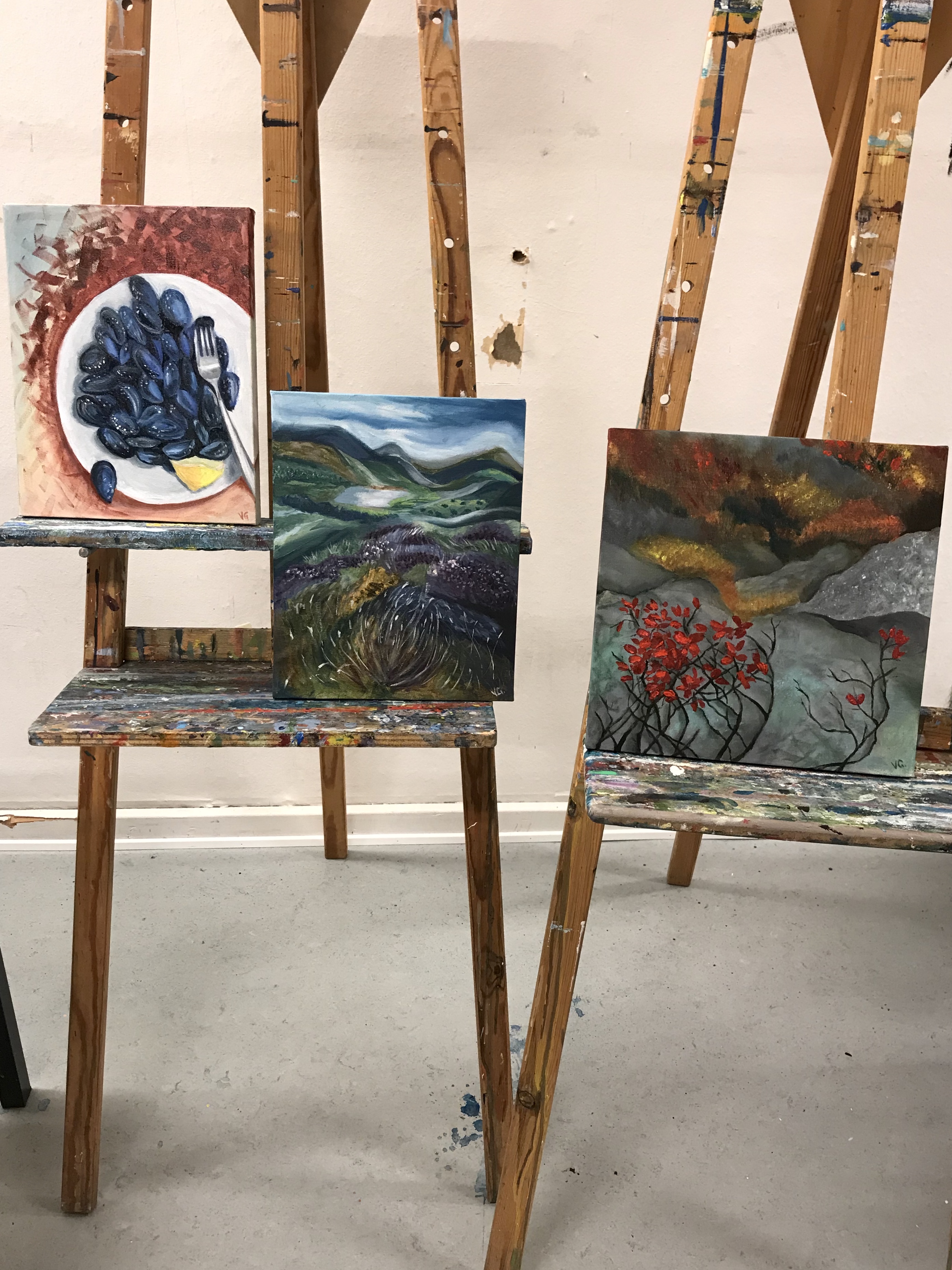
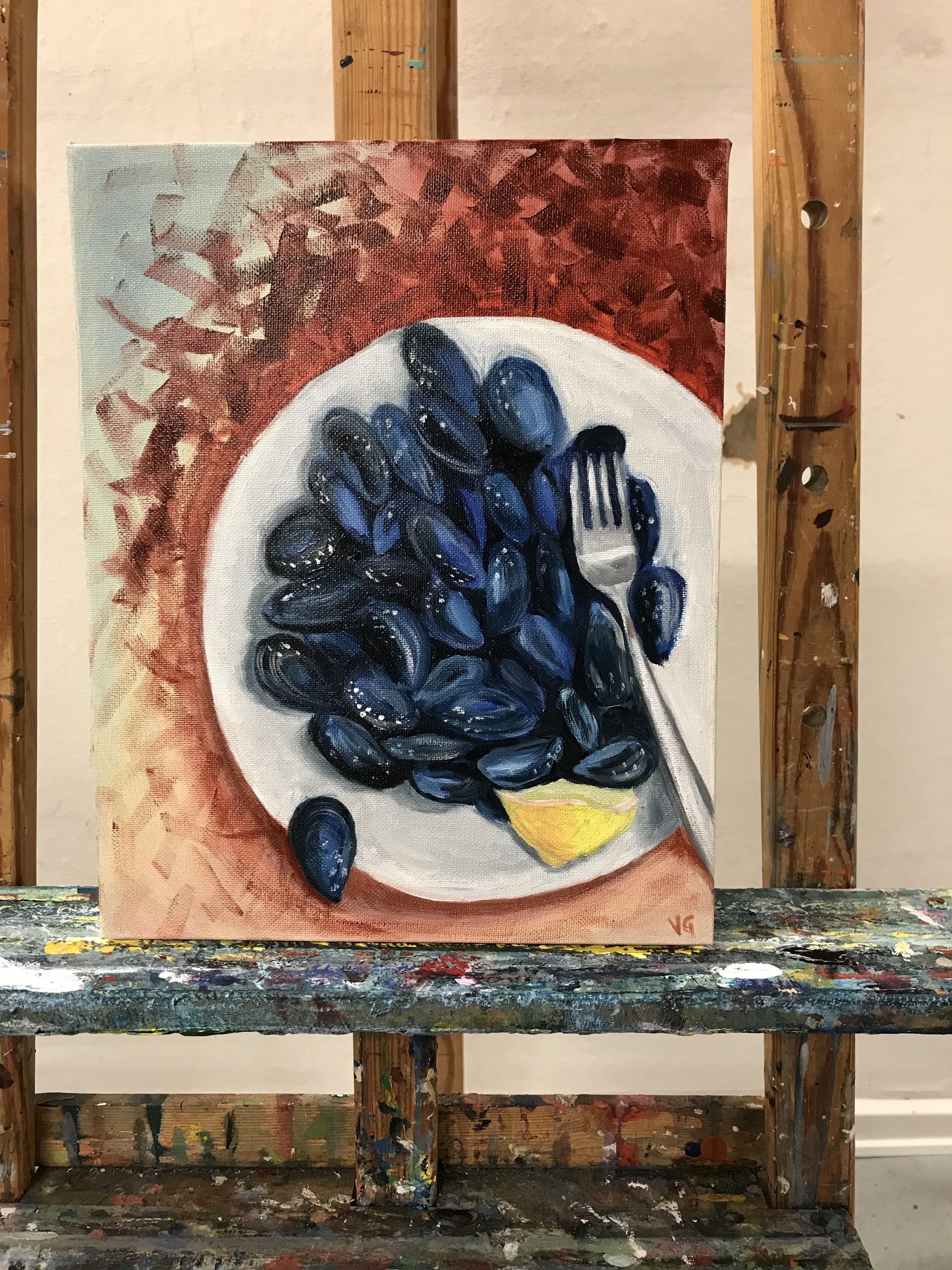
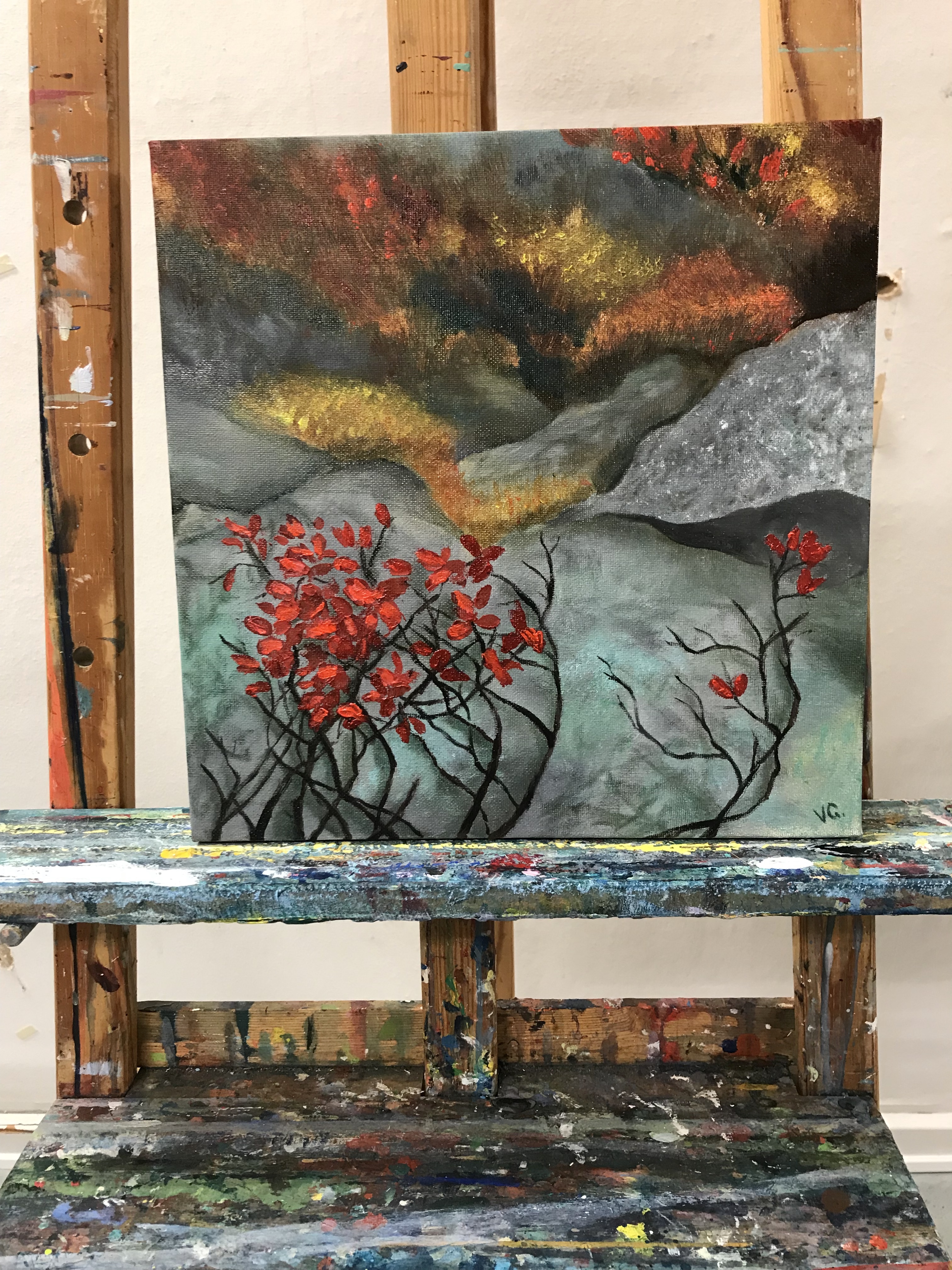
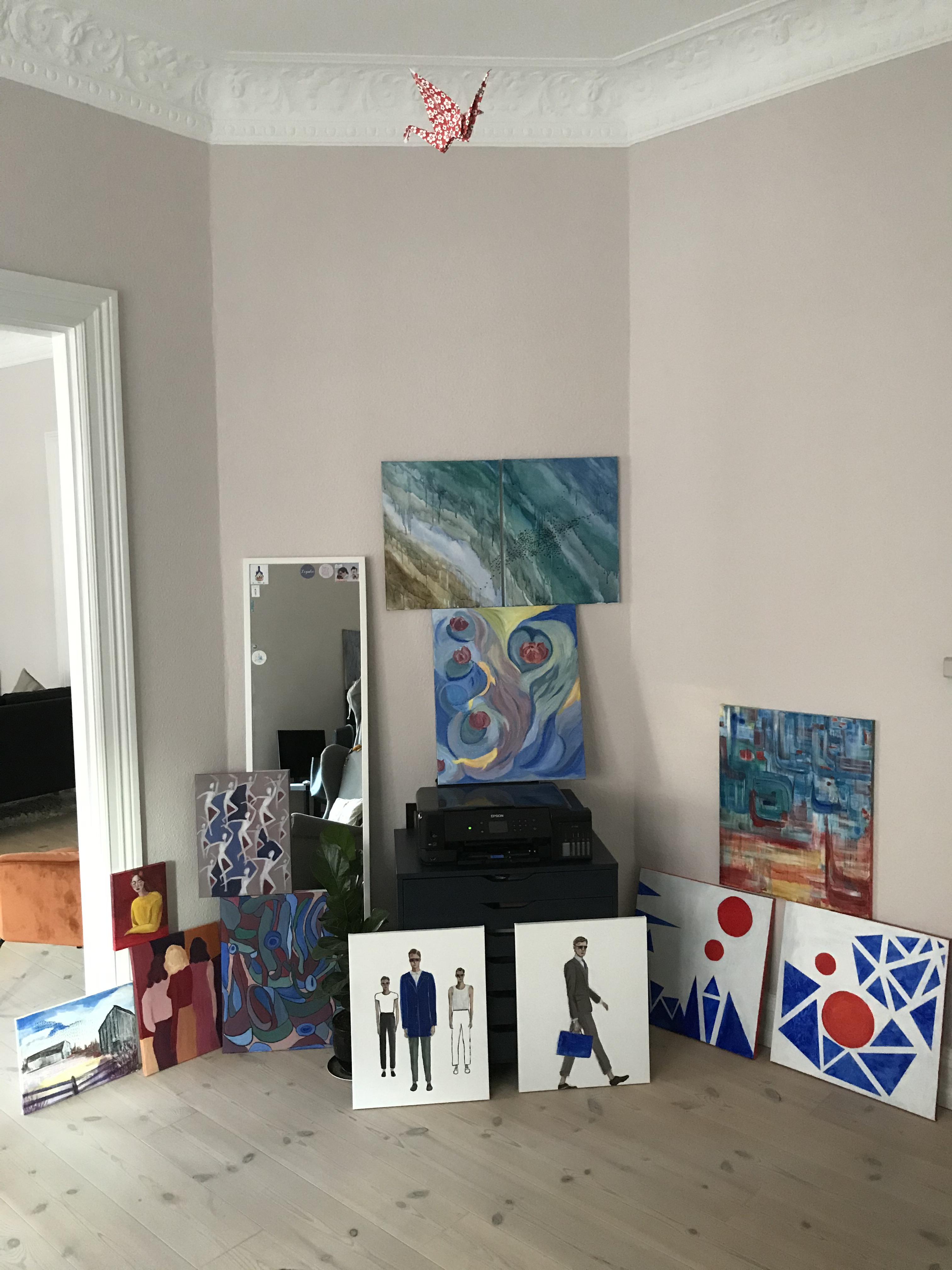
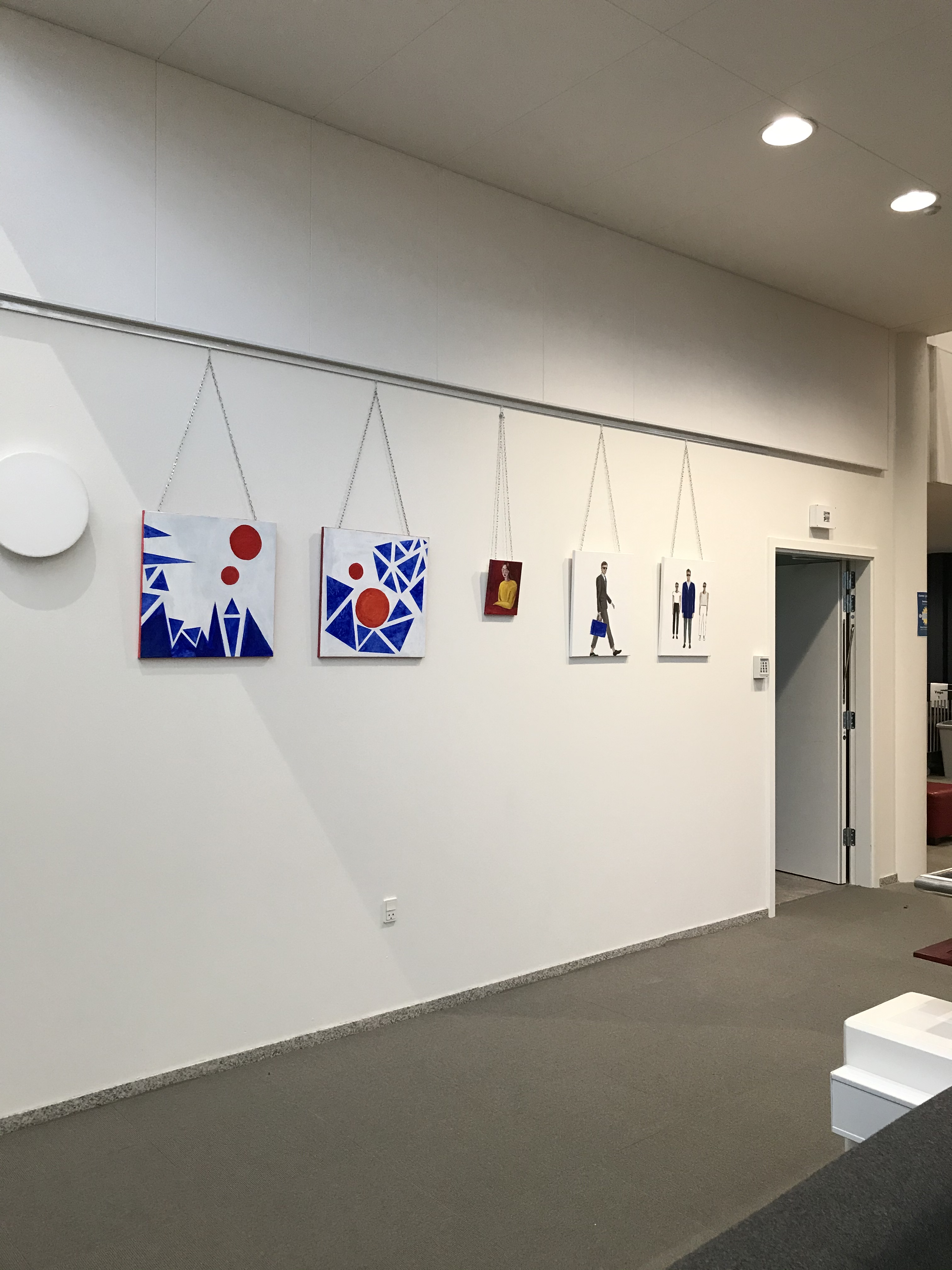
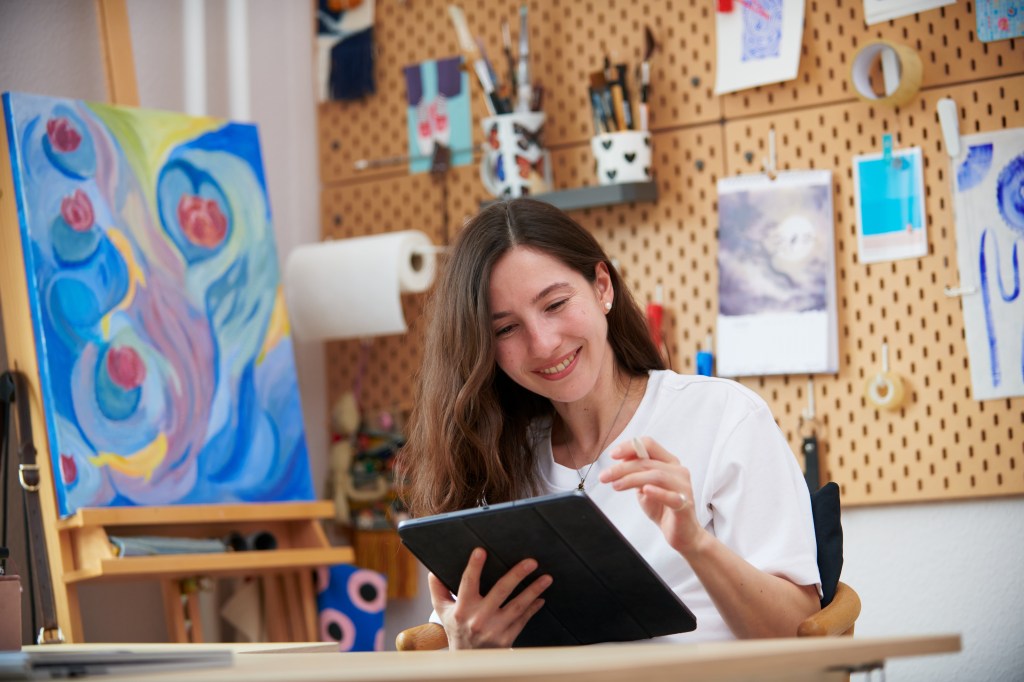
In autumn 2019, I decided to go back to school again and learn to paint on canvas. I had a sort of inferiority complex because I thought canvases were for big artists, and until then, I had only worked on paper with watercolor and printing. So I felt very excited and intimidated at the same time. At that point, I had my basics and knew how to draw and paint, so I could focus on the medium and actually learn to do it. I finally tried oil—it’s the yummiest paint to work with, but also the most capricious. I had a very nice teacher, Henrik. By then, I spoke quite fluent Danish, so I could keep up. It was a very rewarding course, but unfortunately, it was cut short by the pandemic, and after that, I never returned to regular courses. Now that I think about it, I also took a ceramic course in the same type of school. It was interesting, and I really love the pieces that I actually made, but I went there to learn to use pottery wheel and I sucked big time at it. The teacher didn’t really have enough time for me because I was the only beginner in the group, so I felt continuously frustrated and couldn’t wait to finish the course. But instead of making proper cups I made small sculptures and now I think it was even better 🙂 sometimes I think that maybe it could be quite cool to try again, just tone down my expectations a little, go with the flow, and just enjoy it.
Chapter 6: Digital
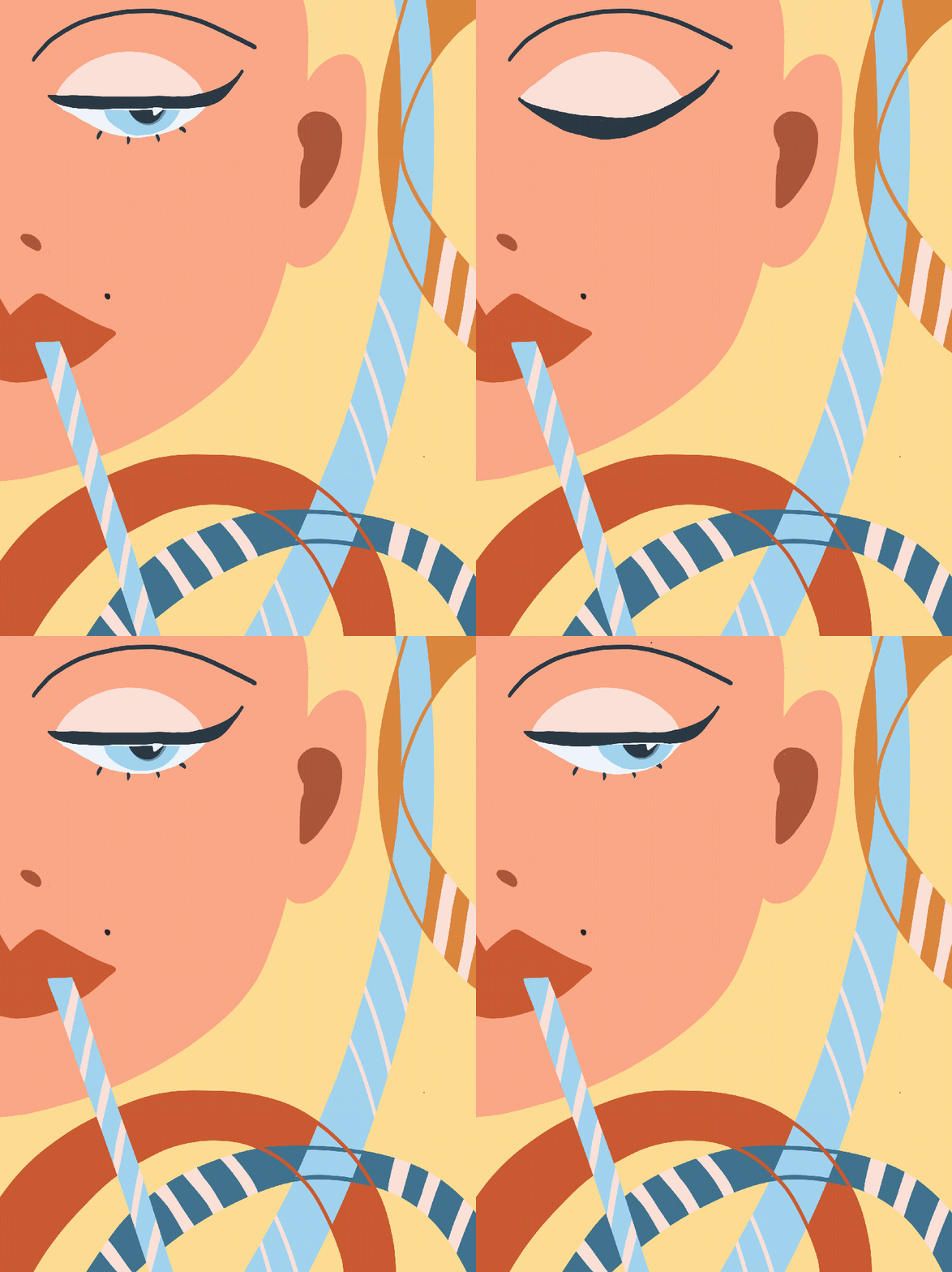
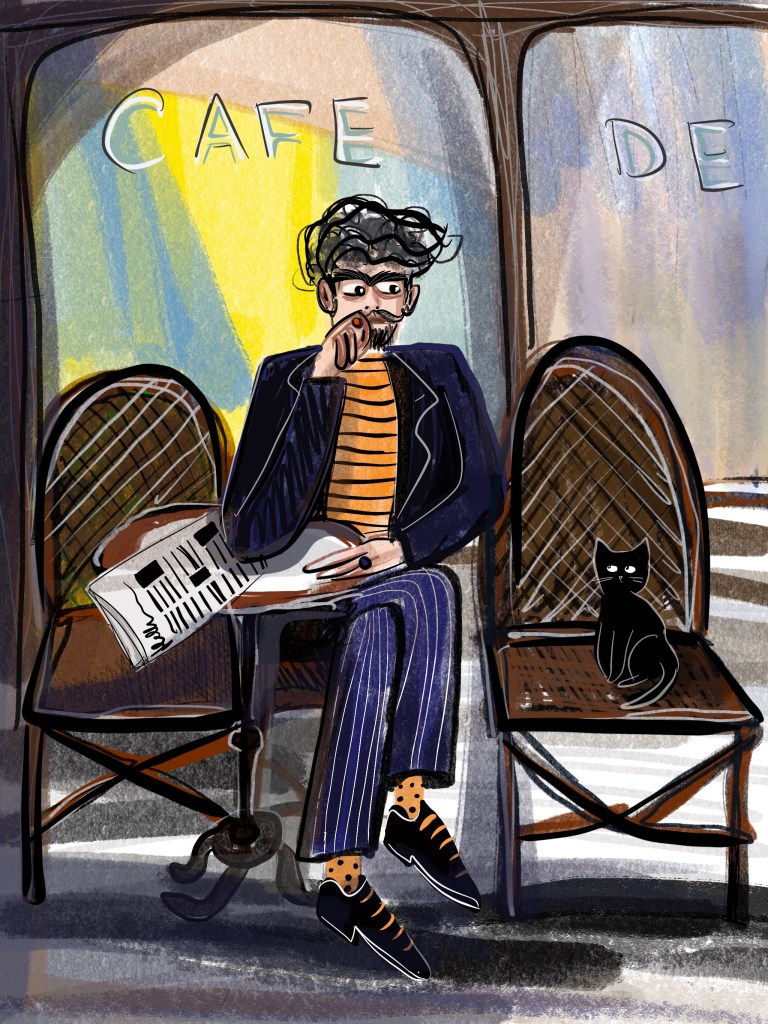
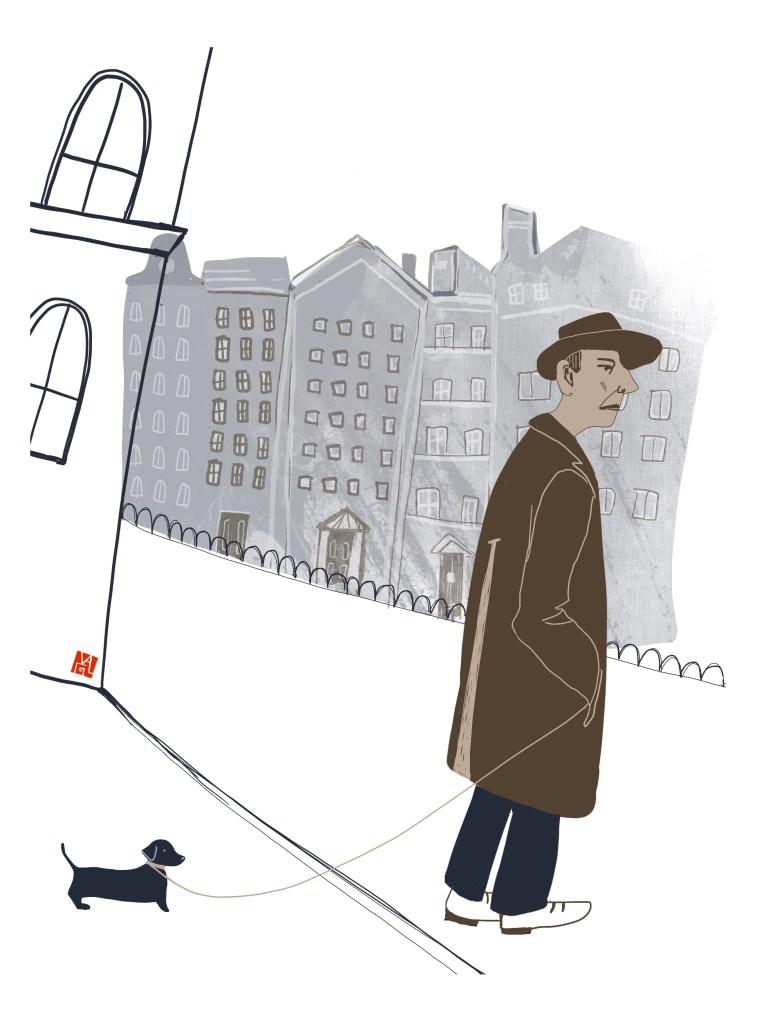
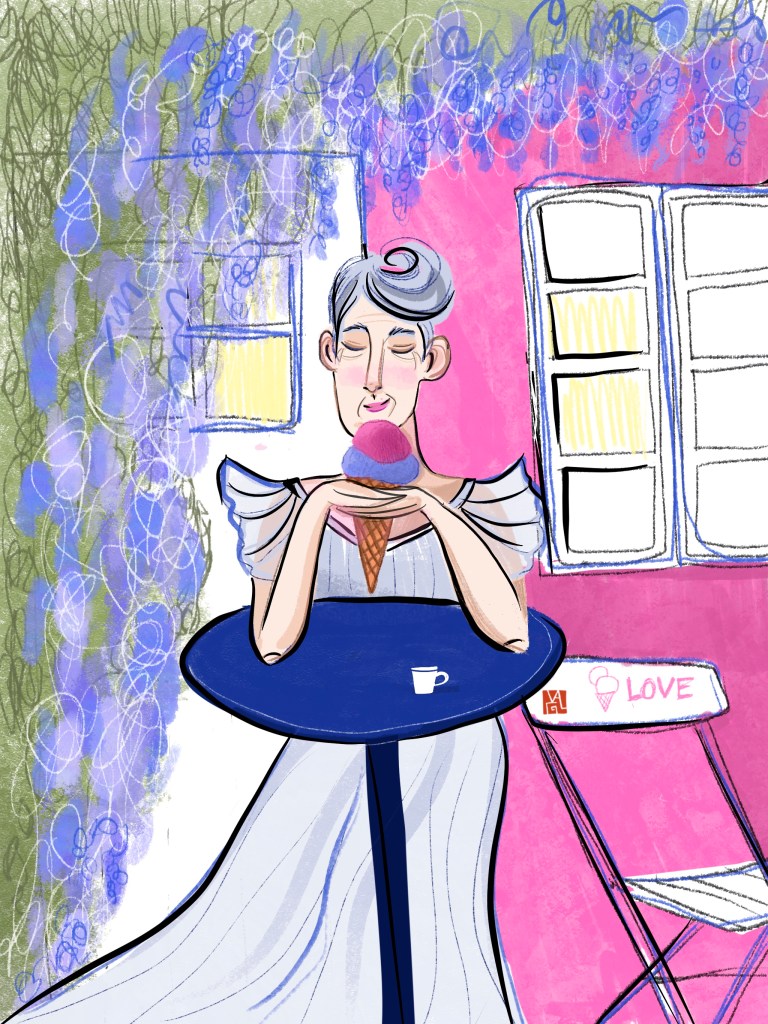
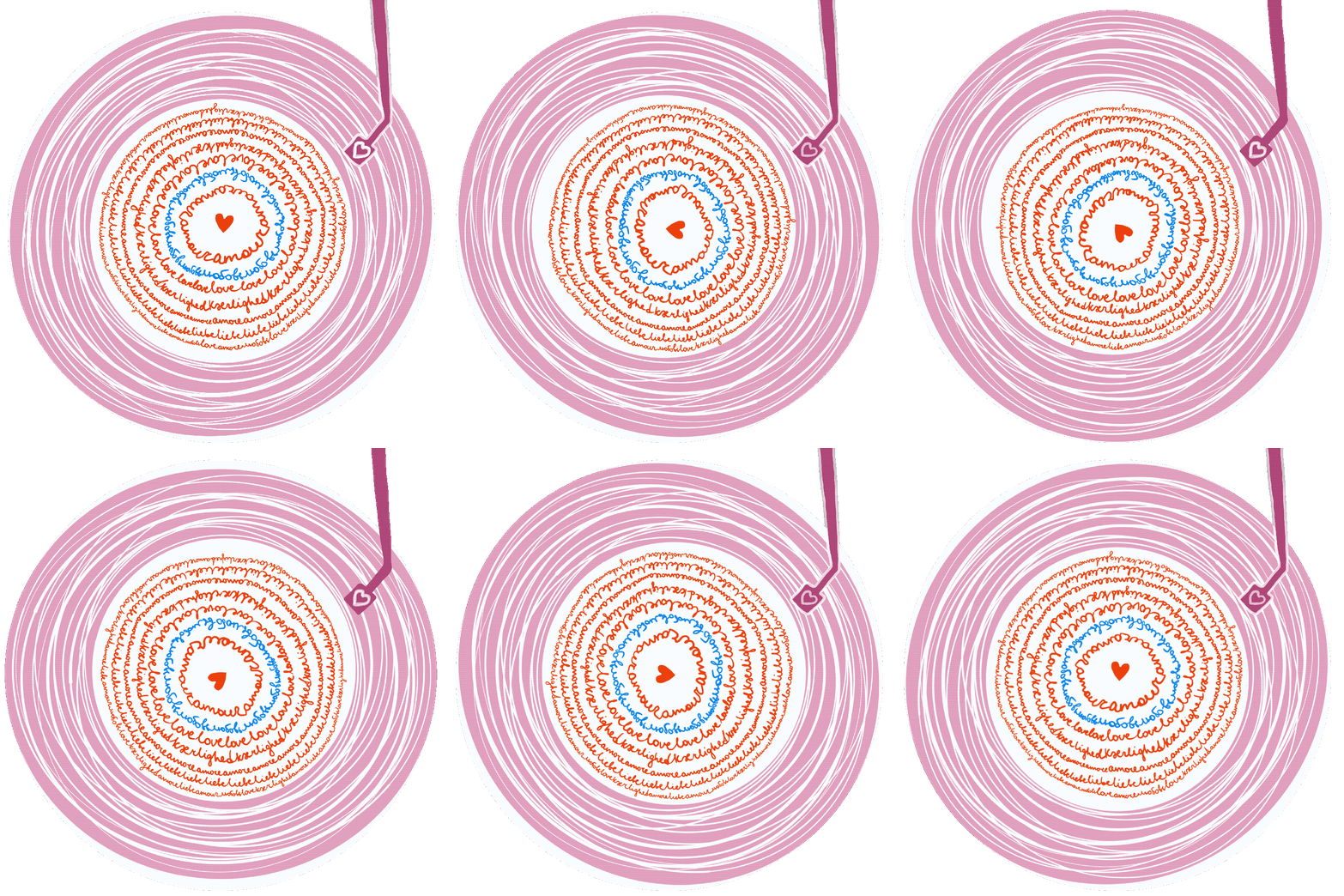
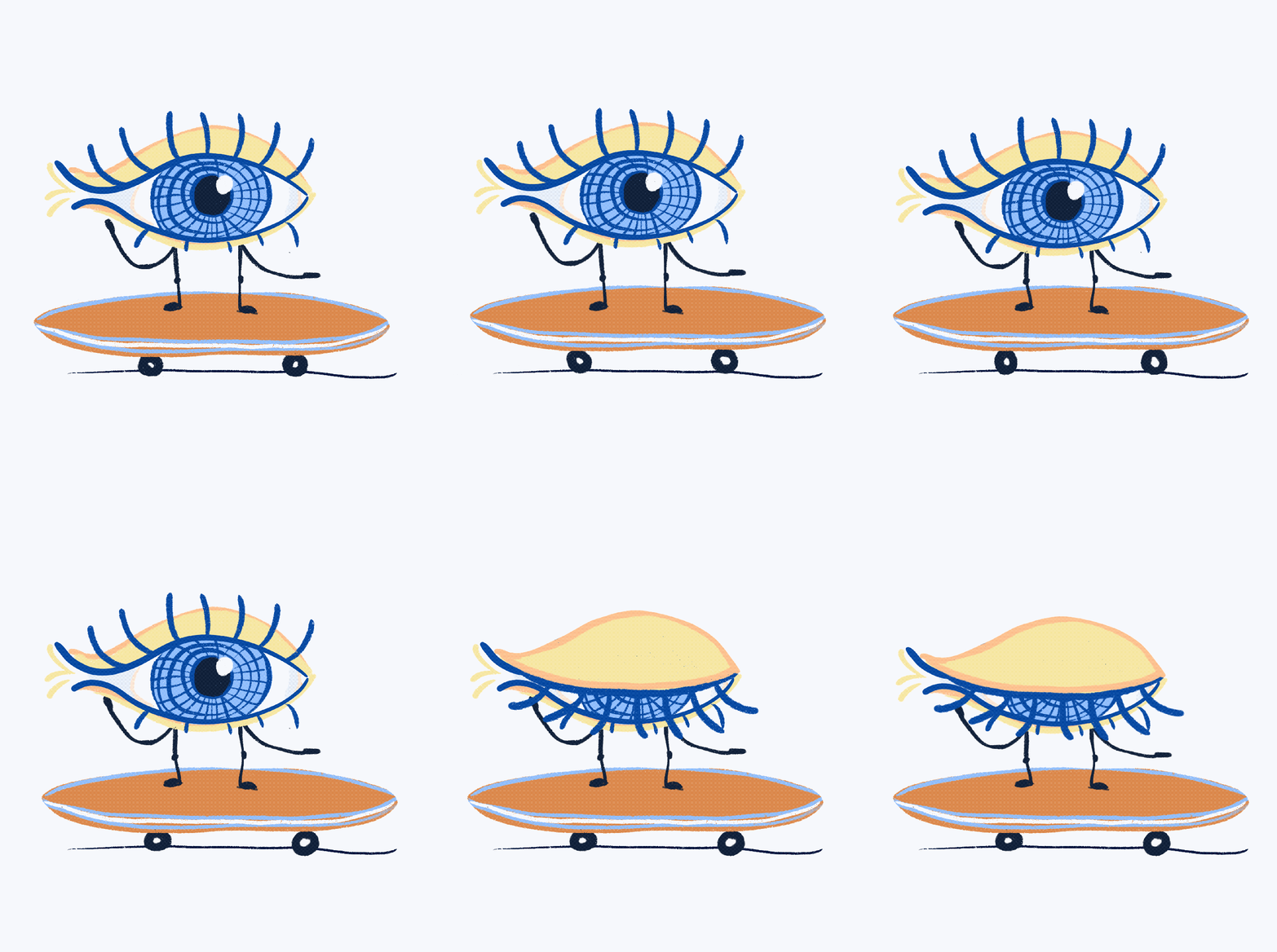
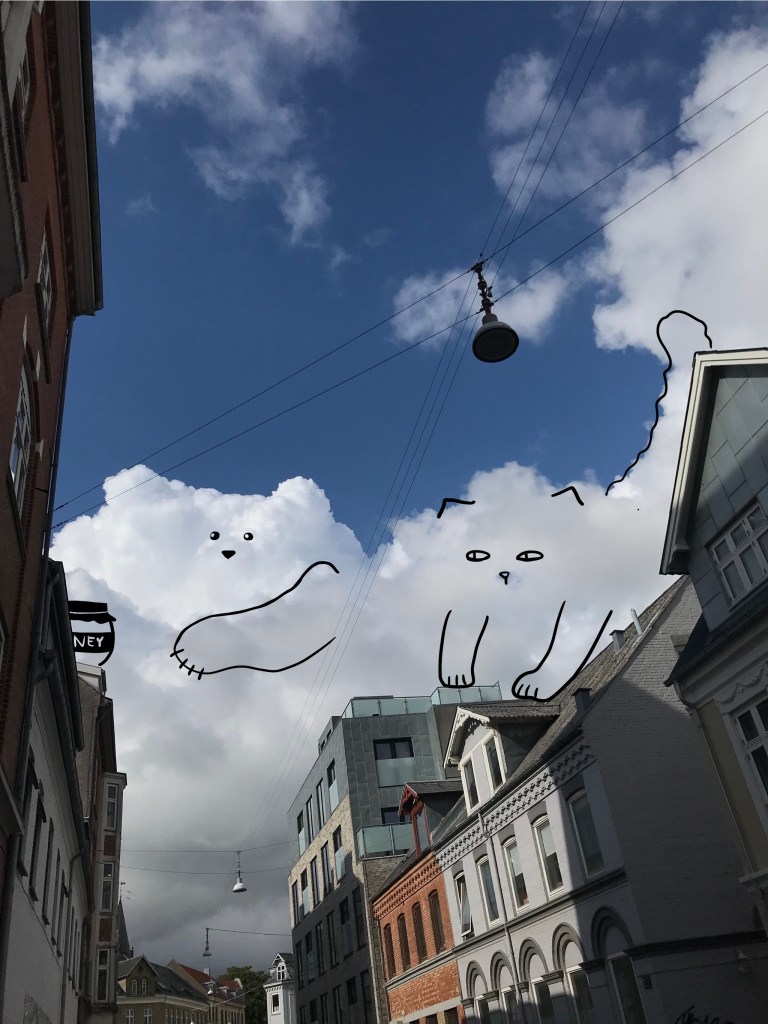
In 2021, I got an iPad with Procreate, and since then, I’ve been doing analog art less frequently. The main reason is the convenience: working with wet materials requires precision and time because you have to clean up after yourself. I still enjoy analog art and do it from time to time as a personal form of meditation; it feels very special to me. But it’s so much easier to create art in bed just before you go to sleep. Since getting Procreate on my iPad, I’ve done a lot of digital art. I also started designing scarf patterns in Procreate, and I’m really proud of some of them. 🙂 I’ve also tried creating small animations and hope to spend more time on that in the future. It’s a very interesting way of expressing myself—not just “quick and dirty,” though it’s not dirty at all, hehe. It’s also very rewarding and forgiving. I love having the option to crop or extend my canvas, try different colors without having to start a new picture each time, and so on.
So this is where I am now: doing a lot of convenient digital art, but still returning to the good old ways from time to time. I still believe that paper and paint have a soul. It’s very special when something is absolutely unique and cannot be repeated 100%. Digital art is a bit like mass-produced cookies versus homemade treats, but most of us shop in regular supermarkets daily, don’t we? 🙂



 Valeria Gulieva